
Reading Dubrovnik history in the city
Dubrovnik history connects a maritime city, its defensive walls and an urban landscape shaped by destruction and rebuilding. UNESCO describes Dubrovnik as an important sea power from the 13th century. The same account highlights the severe earthquake of 1667, the city's Gothic, Renaissance and Baroque architecture, and damage during armed conflict in the 1990s. These are useful reference points for a visit on foot.
Approach the city as a place with several historical layers, rather than expecting every street to belong to one period. Start with the Old Town to understand the relationship between the main street, gates and buildings. Then choose whether to add the walls or a museum. That sequence gives the landmarks a shared context while allowing time to look closely at the features that interest you.
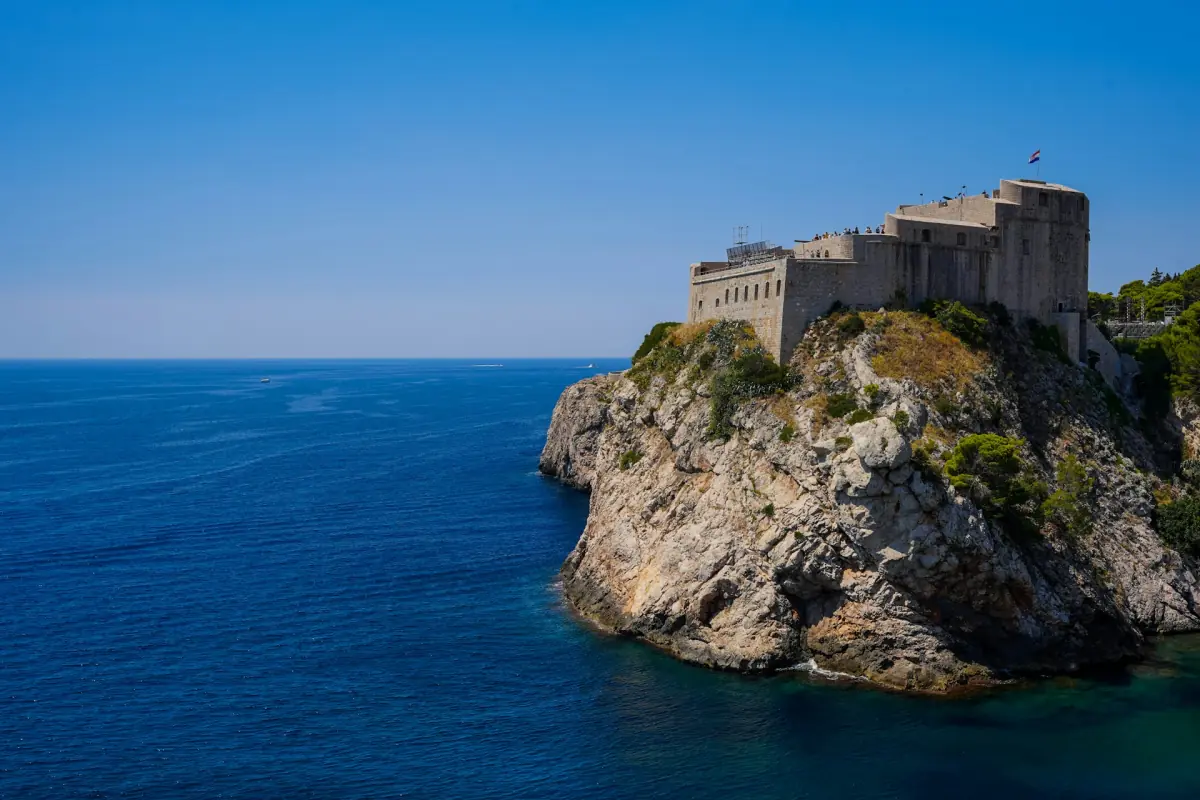
Walls and maritime power
The current circuit of the city walls dates from the 13th century, with development continuing until 1660. The operator gives a length of 1,940 metres and a height reaching 25 metres in places. Those figures help explain the scale of the fortifications visible around the historic core. A walk on the walls offers a different way of reading the city from a walk between its buildings.
Lovrijenac is a separate fortress included with a city wall ticket. For practical entry arrangements and the distinction between admission and a guided tour, use the city walls guide. Keep historical interest separate from the ticket choice: looking at defensive architecture, entering the wall circuit and following a guide are related activities with different planning needs. Choose the format according to whether you want an elevated circuit or a street-level introduction.
Our picks: History
A guided Old Town walk includes filming locations and the West Harbour.
Hand-picked tours, booked through Viator. Prices are indicative starting prices in euros (as of October 2026). Tap a tour for live availability and the current price in your currency.
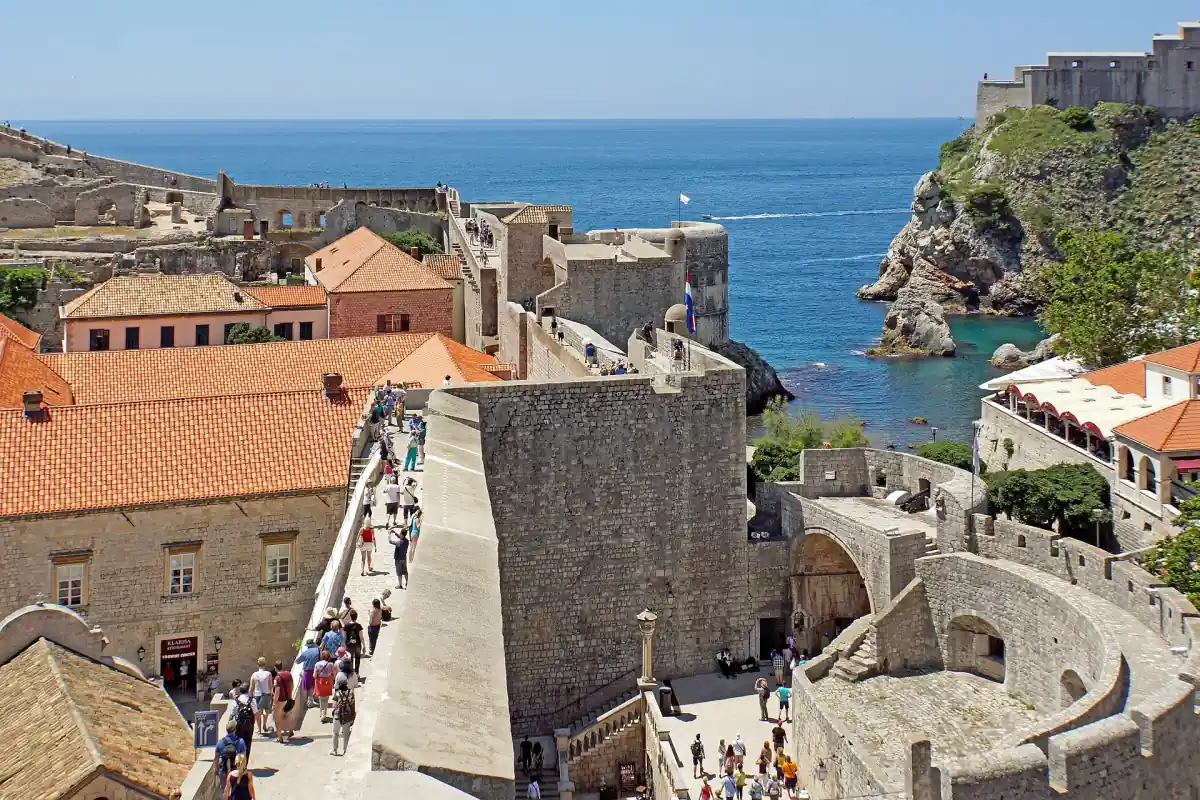
Walk the Old Town with a guide
This English-language walk combines Old Town and West Harbour with a filming-location element.
The earthquake and the streetscape
The earthquake of 1667 is a central point in understanding the city described by UNESCO. Gothic, Renaissance and Baroque forms belong in the same account of Dubrovnik, rather than being treated as competing descriptions of it. As you walk, compare the overall appearance of a street with individual building details. This gives the architectural labels a purpose without requiring you to assign a date to every doorway.
Stradun, also called Placa, provides a focus for that exercise. The tourism organisation connects its uniform Baroque house fronts with rebuilding after the earthquake. Look at the street as an ensemble before turning to a single facade. A guided introduction can help connect the streetscape to the wider story; an independent walk gives you more freedom to pause. Both approaches work well with a separate museum visit if you want more context than an outdoor route can provide.
Museums as a second view of the city
The museum settings make useful connections with the places you see outside. The Maritime Museum is in the fortress of St John, while Revelin houses archaeological exhibitions. The Rector's Palace and Rupe Ethnographic Museum provide further choices for an indoor visit. Decide which collection interests you before assigning a time, so that an indoor stop has a clear role in your understanding of the city.
The winter notice of 29 October 2026 applies from 1 November: the Rector's Palace opens 09:00 to 16:00 and closes on Monday; the Maritime Museum has the same hours and closes on Wednesday; Rupe has the same hours and closes on Tuesday. Build your route around the relevant weekday. Do not leave every museum to an unspecified rainy day, because your preferred collection may have its weekly closure then. The seasonal planning guide helps connect indoor visits with the rest of your trip. The winter notice effective from 1 November 2026 also lists closures on Christmas Day, New Year’s Day and Saint Blaise’s Day on 3 February. On 24 and 31 December, opening hours are 09:00 to 12:00.
Saint Blaise and modern heritage
The feast of Saint Blaise, Dubrovnik's patron saint, falls on 3 February and includes a procession in UNESCO's cultural description. Treat this as part of the city's living cultural context. If that date is your reason for travelling, consult the event arrangements for your year rather than using a historical description as a service timetable. Religious tradition belongs beside architecture and maritime history in understanding the place.
The Old City entered the UNESCO World Heritage List in 1979. Damage during armed conflict in the 1990s is another part of its modern history. Allow these different periods to remain distinct when you visit. The offered English-language walking tour lasts 150 to 180 minutes, starts at Ploče Gate and includes Old Town, West Harbour and a filming-location element. Choose it for that combination, then use museum time or your own walk to explore the historical themes that hold your attention.
Questions about your visit
When did Dubrovnik become a UNESCO World Heritage Site?
The Old City was inscribed in 1979.
What changed the city in 1667?
Dubrovnik suffered a severe earthquake. Rebuilding is part of the context for the Baroque streetscape.
Is the offered walk only about history?
It combines an English-language guided Old Town and West Harbour visit with filming locations, over 150 to 180 minutes.